Économie
DTCC launches its tokenization service with twenty institutional participants
DTS, launched on October 28, represents entitlements to securities held at DTC on blockchain. It starts on Canton and a private Besu network within a defined scope.
 Ethan BrooksEditorial pen name
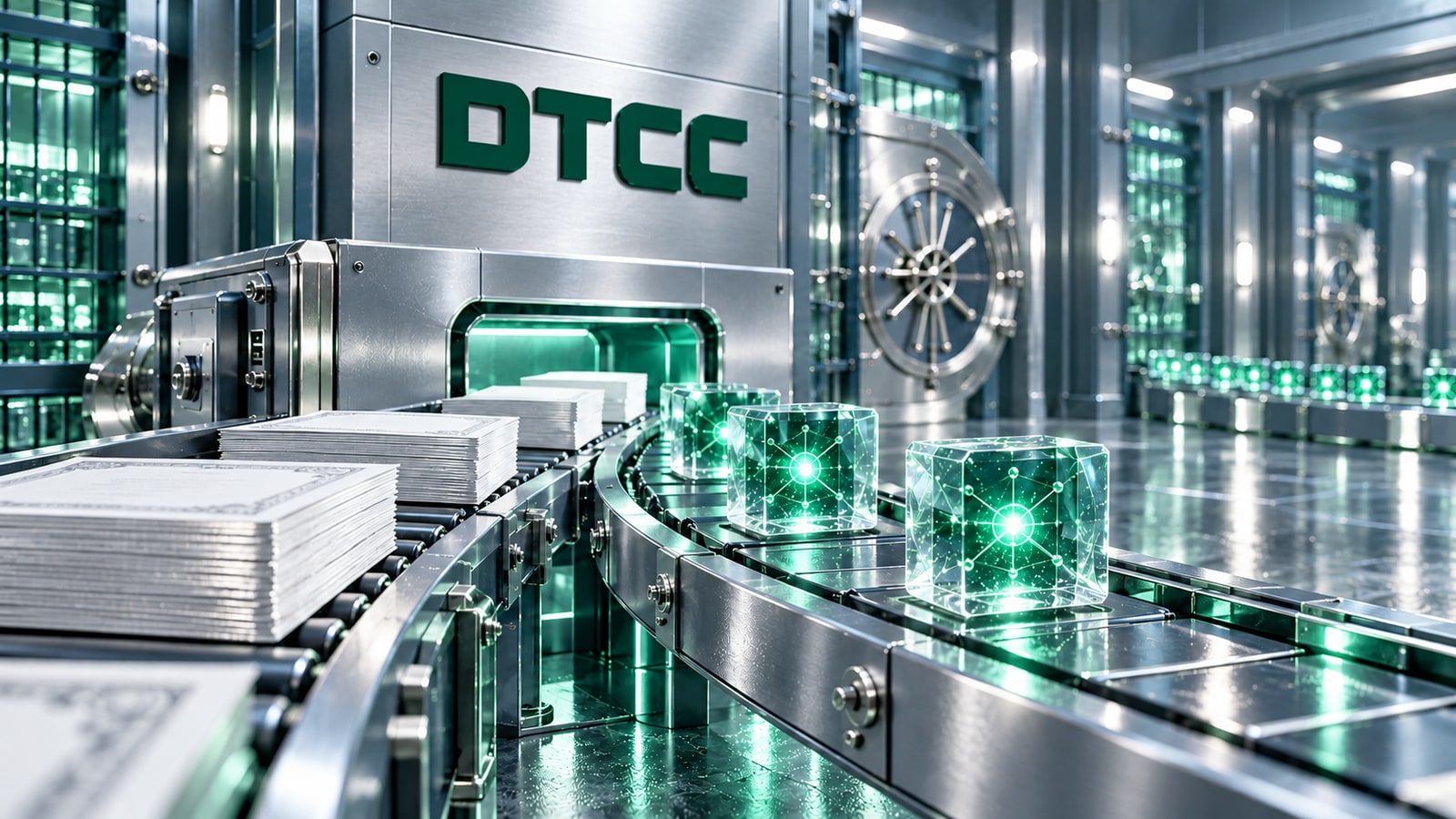
Custodied securities, entitlements represented as tokens
The Depository Trust Company, a DTCC subsidiary, announced the launch of the DTCC Tokenization Service, or DTS, on October 28, 2026. The service converts entitlements to certain securities held at DTC between traditional and tokenized forms. Eligible users can then receive these representations in registered digital wallets. The announcement marks a move into production following limited operations in July. It does not mean all assets held by the depository are changing their form.
DTCC describes these representations as digital twins that retain the ownership rights, economic entitlements and protections of traditional securities. DTC holds more than $114 trillion in assets, but that total measures its custody activity. It is neither the amount already tokenized nor the volume announced for the DTS launch. Confusing those figures would turn a precisely defined infrastructure change into a wholesale shift by Wall Street that the announcement does not describe.
Canton and Besu for the first participants
Twenty DTC participants have signed agreements to access the service. The list includes JPMorgan, Citi, Bank of America, Morgan Stanley, UBS, Barclays, State Street and BNP Paribas, alongside firms such as Alpaca and Citadel Securities. An access agreement does not establish how many securities each institution has already converted or transferred. DTCC plans to onboard additional users gradually. It says the system was developed with a working group comprising more than 150 companies.
Technically, DTS is integrated with the Canton Network and DTCC's private network using Besu. Additional blockchains are to be added in 2027. This approach connects traditional and digital infrastructure across multiple networks rather than requiring all participants to use a single chain. Token transfers between registered wallets should not be confused with every conversion or settlement operation: those retain their own conditions and operating arrangements.
A rollout within a limited framework
The launch builds on a no-action letter received from the SEC in December 2025. The described scope includes Russell 1000 equities, exchange-traded funds tracking major indexes and US Treasury securities. This regulatory process concerns a specific service and defined conditions; it does not amount to general approval of all tokenized assets. The group also recalls initial transactions completed with more than thirty firms before this commercial launch.
For institutions, the stated benefits involve asset mobility, collateral deployment and access to liquidity. These objectives must be distinguished from quantified results already demonstrated for every user. Putting securities on a blockchain removes neither access controls nor operational risk, and does not make all products available to retail investors. The October 28 milestone is first measured by a service actually opening, its participants and supported networks, and subsequently by the use made of it.