Technologie & IA
Counterfeit Ledger: Why an Authenticity Check Is Not Always Sufficient
A recovery phrase already provided and a genuine device that has been modified represent two distinct risks. Ledger's documents explain the checks and their limits.
 Olivia ParkerEditorial pen name
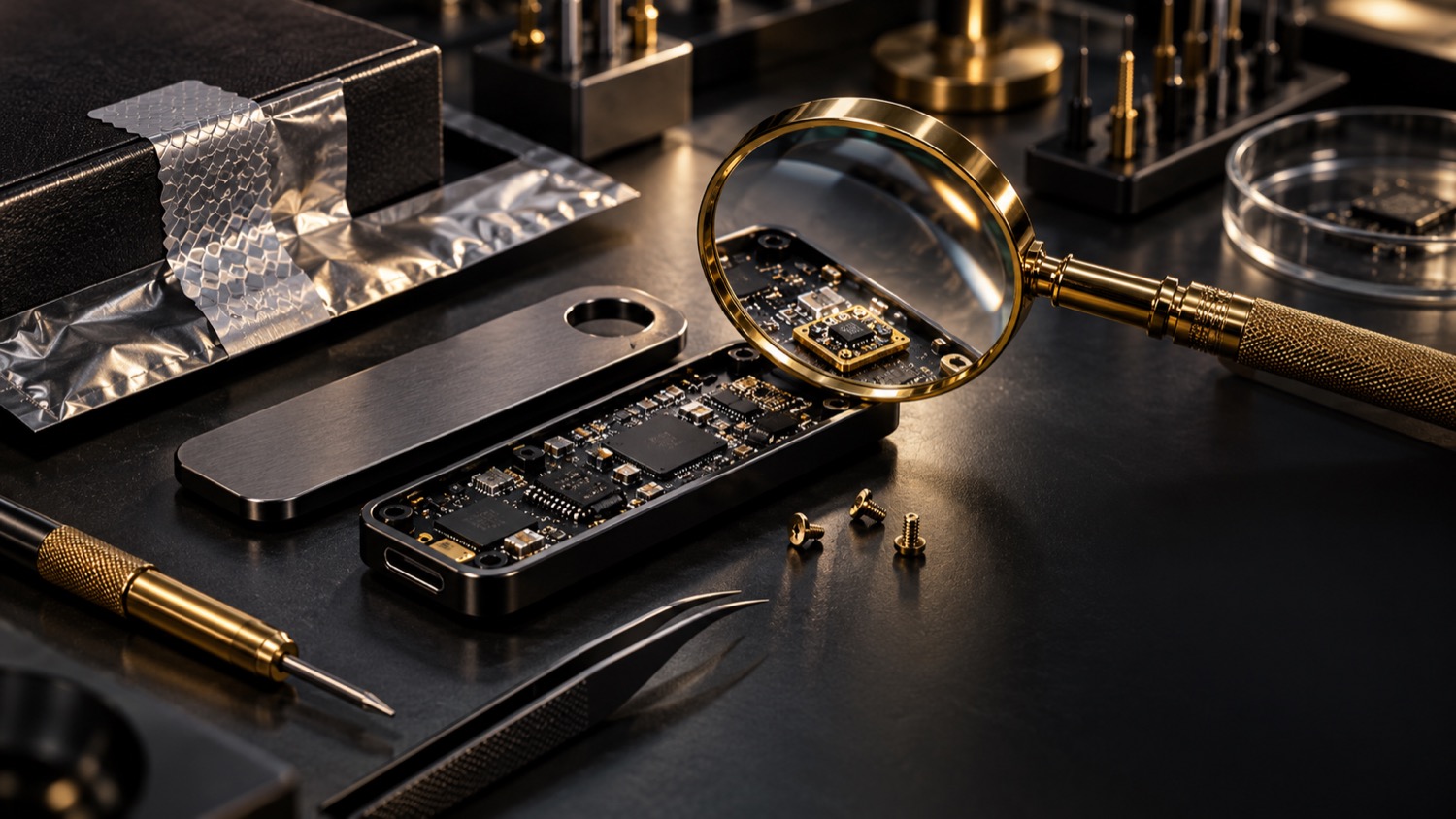
A hardware wallet can be genuine while having been altered after its manufacture. This distinction lies at the heart of the security explanations published by Ledger, as the company describes a hardware attack targeting devices re‑introduced into distribution in Southeast Asia. The risk therefore does not only concern crude copies: it also concerns the product's journey before its first use and the confidentiality of the recovery phrase.
A recognized chip does not describe the whole device
The Ledger Dungeon laboratory explains how the authenticity check works. A secure chip answers a cryptographic challenge and allows the software to verify its origin. This check has a precise function: to recognise a component that carries the expected attestation. The same document notes that it does not necessarily detect an unauthorised physical modification if the original secure component remains intact. A positive result therefore does not constitute an inspection of the entire circuit.
In its response dedicated to hardware implants, Ledger states that authentic devices have been opened, equipped with components intended to intercept the recovery phrase during setup, and then put back into circulation. This description comes from the manufacturer. It does not mean that all of its devices are affected, nor that the cryptography of their chip has been broken. The distinction between compromise of the distribution chain and breach of the secure component avoids drawing a broader conclusion than the facts presented.
A pre‑prepared phrase is a warning signal
Ledger describes separately the risk of pre‑configured devices. A malicious seller can provide a recovery phrase of which they already possess a copy. The product may appear new and its packaging intact; the danger then comes from the secret being shared with the attacker. According to the manufacturer's guidelines, a new device must not arrive with a recovery phrase or a PIN already set for its user. Accounts associated with such instructions should not be funded.
The recommendations also cover the installation software. Ledger urges users to use its official channels and to refuse any request to enter the recovery phrase on a website, phone, or application. A hardware device no longer protects the secret if its user hands it over to a third party. A false support emergency or an unsolicited replacement can thus shift the attack to the instructions accompanying the product, without requiring any weakness in the algorithms.
Check the journey, then preserve the secret
The Dungeon security model distinguishes the storage of keys from their use for signing. The recovery phrase allows the wallet's keys to be derived; the confidentiality of this element is therefore decisive. On Ledger devices, the manufacturer describes storage within the secure component and restrictions intended to prevent applications from accessing the secret directly. These technical protections address certain scenarios, but they must be examined together with the initialization conditions.
For Nexorena, the useful approach consists of combining verified origin, authenticity check, and vigilance regarding received instructions. An opened or suspicious package justifies suspending setup and contacting official support, without transmitting the recovery phrase. One should also avoid improvising a disassembly that could damage the product or create another risk. The lesson is not to replace one verification with another, but to understand what each can actually establish.