Staking
Developer seeks $40,000 from Lido for an Ethereum hardware signer
The November 24 proposal aims to isolate validator keys on microcontrollers. Funding is still pending and testing on physical boards has yet to take place.
 Olivia ParkerEditorial pen name
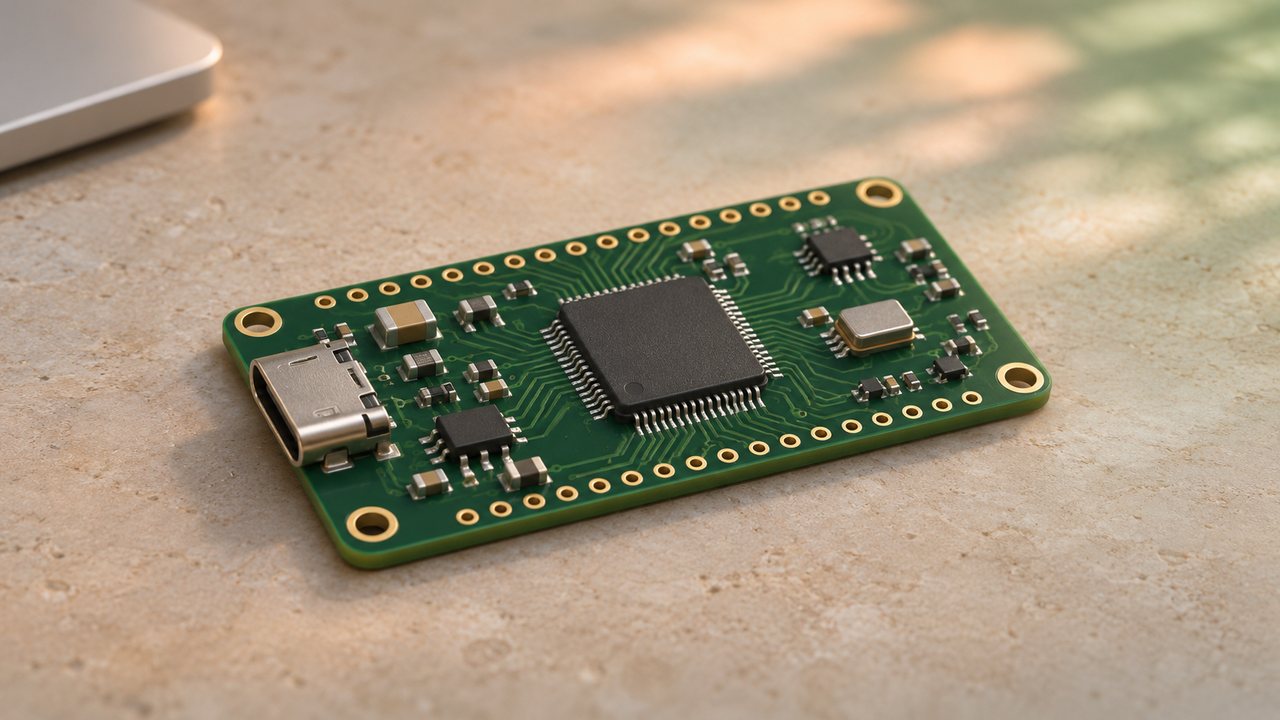
Validator keys isolated on a board
On November 24, node operator Vany Serezhkin submitted a $40,000 request to Lido’s LEGO grants program to develop eth-hw-signer, a signing tool for Ethereum validators. The project responds to a separate call Lido issued on November 18 after two infrastructure incidents led operators to withdraw their validators. The call seeks several open implementations that operators can run on their own premises, with keys isolated from the server running the client. Serezhkin’s request is part of that call and funding is still pending.
In the proposed setup, the validator client continues to send requests to a remote signing service. The service passes them to a microcontroller board that holds the key. Serezhkin says the board is designed to interpret each request independently before signing and keep its own record to avoid signing conflicting messages. This division of responsibilities aims to limit what a compromised server can make the board do. Lido’s call requires, among other things, that the key remain protected within the hardware boundary and that the signer work with at least three consensus clients.
Simulation before testing on boards
The proposal also provides for a backup device for some validators. In that setup, a decision shared by the devices and an arbiter is meant to prevent the key from being used at both sites at once. Serezhkin says an initial software model of the setup was tested in 26 scenarios. Those tests helped correct a coordination flaw in the model after the arbiter was restored. The proposal distinguishes that work from validation on the boards themselves, whose performance and behavior under real conditions are still to be measured.
The first milestone, which the applicant plans to fund himself, is to measure signing time on the STM32U585 microcontroller. At the time of submission, the team had a host service, a simulation and an emulator proof of concept. No testing had taken place on a physical board, according to the application. The public repository has since added code directories, but its documentation still says nothing runs on a physical board. The project plans to publish test results. The initial benchmark is intended to determine how many keys a board can serve during the busiest periods.
Hoodi as a funding milestone
The proposal sets a minimum of 100 validators on physical boards for 30 days of live duties on Hoodi, an Ethereum test network, without a slashable signature. It targets around 500 validators with a backup device for each key if the first results allow it. The applicant plans to ask Lido for the necessary test funds. He also says he would wait for three months of continuous activity on Hoodi and a peer technical review before recommending use on mainnet.
The request divides the $40,000 among development, hardware purchases and two years of maintenance. It calls for $10,000 on approval and $20,000 at the 30-day Hoodi milestone. The balance would be paid in eight quarterly installments for support. Lido plans to review applications as they arrive and assess technical results. The proposal gives hardware costs and expected capacity as estimates and flags limitations where someone has physical access. The program’s decision and the results on physical boards will determine whether the tool can move to a trial with operators.