Paiements
Midnight, WEA Japan and Netstars to study stablecoin payment privacy
The agreement announced on November 27 covers automated payment reconciliation and protection of merchant balances. The partners will also examine connections to Ethereum and Solana. The terms of a commercial rollout have yet to be defined.
 Ryan MitchellEditorial pen name
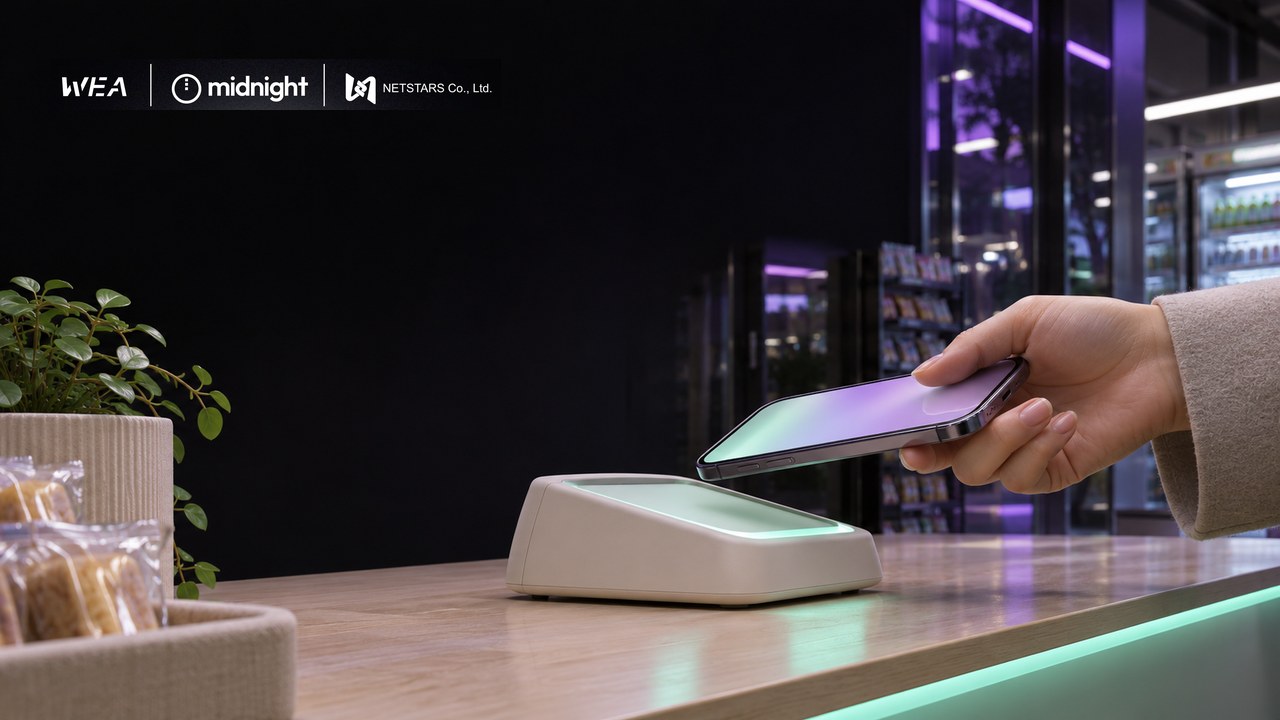
An agreement to study in-store payments
Midnight Foundation, WEA Japan, and Netstars announced on November 27, 2026 that they had signed a memorandum of understanding on stablecoin payments. Their statement identifies several areas of work, including processing speed, security, and protection of merchant data. The agreement sets out how the partners will explore shared solutions. They still need to specify which use cases to pursue, which networks they want to test them on, and how the features could be made available to merchants.
In Japan, Netstars offers StarPay, which lets stores manage several payment methods through one service. According to the statement, it began offering Stablecoin Pay to merchants in July 2026. It also worked with WEA Japan on in-store trials. WEA Japan develops QR code payments compatible with multiple blockchains. The cooperation announced on November 27 can draw on a payment flow both companies already know, from the customer’s wallet to the provider processing the payment.
Reconciling payments while protecting balances
The statement lists privacy for merchant balances and transaction records among the topics to be studied. A store needs to match each payment to the corresponding sale, for example to identify a missing payment or one assigned to the wrong purchase. Automating reconciliation requires sharing the information needed for verification. The partners want to examine how to run that check while limiting who can see balances and transaction details.
Midnight Foundation brings experience with selective disclosure on the Midnight network. This approach can verify certain information without giving every participant access to all the data used in verification. For in-store payments, the question is what the merchant, the payment provider, and the other parties each need to see. The security work also includes key protection. The statement describes these needs without specifying what proof mechanism would be used for each transaction.
Ethereum and Solana are among the networks under consideration
The partners plan to study how to extend these privacy features to multiple blockchains. The statement names Ethereum and Solana. WEA Japan says it already works with stablecoins including USDC, USDT, and JPYC. That list describes the scope of its QR code payment technology. The partners still need to choose the assets and networks for the new cooperation, as well as the roles of their respective services in processing and reconciling payments.
One question is whether merchants can keep the same reconciliation process when payments come from different networks. To be usable in stores, a system needs to connect a transaction recorded on a blockchain with a specific sale in the merchant’s tools. The November 27 statement sets out those areas of work. It remains to be seen which merchants might participate in a trial and when.